

Earlier this year I modeled some of Zenith’s more famous and interesting products.
How did Zenith start? It was a classic garage inventor story. Ralph Mathews had a unique talent for mechanical invention, and he also had pretty good connections and luck. He started the right business at the right time.
Mathews was building and selling spark gaps in high school. When he enlisted in the Navy in 1914, he ended up working at Great Lakes Training Center where he met Karl Hassel, a talented designer and engineer. After the war Mathews and Hassel started making radios in the Mathews apartment. One of Ralph’s connections offered them temporary use of a vacant lot on wealthy Sheridan Road, and they quickly put up a Sears modular house.

The available pics don’t show the nearby mansions, so I threw in a couple to illustrate how inappropriate the Sears shack looked.
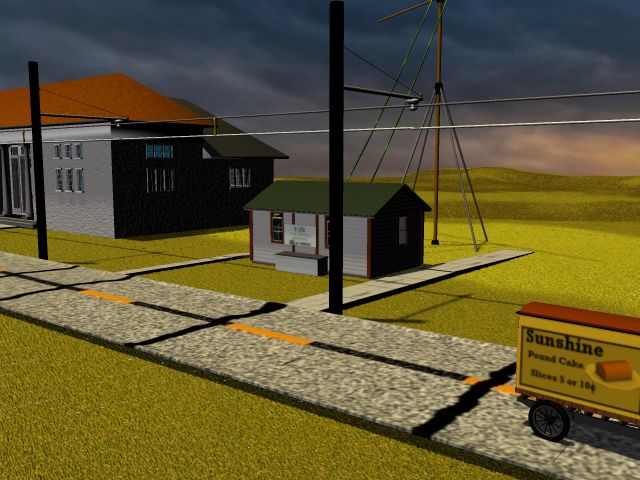
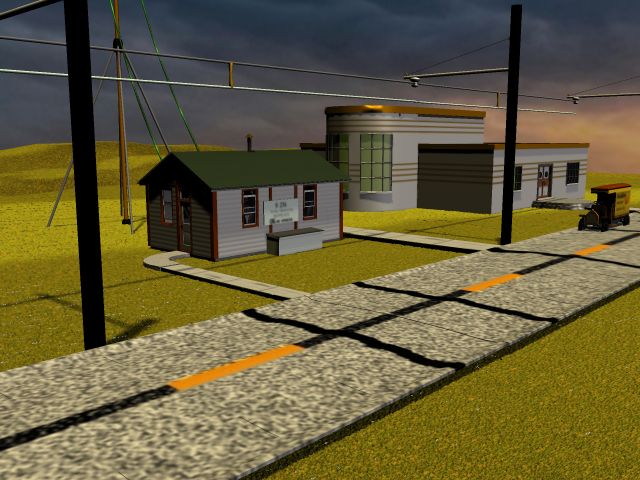
Ralph and Karl optimistically named their outfit Chicago Radio Labs, and used Ralph’s ham call 9ZN as the trademark. Here I’m trying to replicate the one available pic, which shows the Lab all decked out for display, with Ralph and Karl and helpers hanging around outside.

The display was focused on 9ZN’s three main products sitting on the coal bin:

Closing in on the most complex one, the Regenerative receiver. It had three Audions and lots of pots, variometers and variable caps.

Before the 1934 Communications Act, the line between amateur and commercial was blurry, and many ham licenses were owned by companies or commercial stations. Note that a ham in Sioux City used the Radio Labs name, possibly before Mathews. Was this where he got the idea?

9ZN soon expanded to Z-Nith, and the company soon expanded beyond what two hams and a couple of helpers could handle. They picked up some serious businessmen as partners and rented part of a factory on Ravenswood, then soon occupied their own huge factory on Iron Street.

This 1921 ad lists Ravenswood as the factory, and the Sheridan shack as their Testing Station. The front room of the shack was the factory, and the back room was the 9ZN ham station.
Our crew is busy building and testing several early Z-Nith products. Here Polistra is testing the Mathews rotary spark gap using an Olivetti wearable voltmeter:
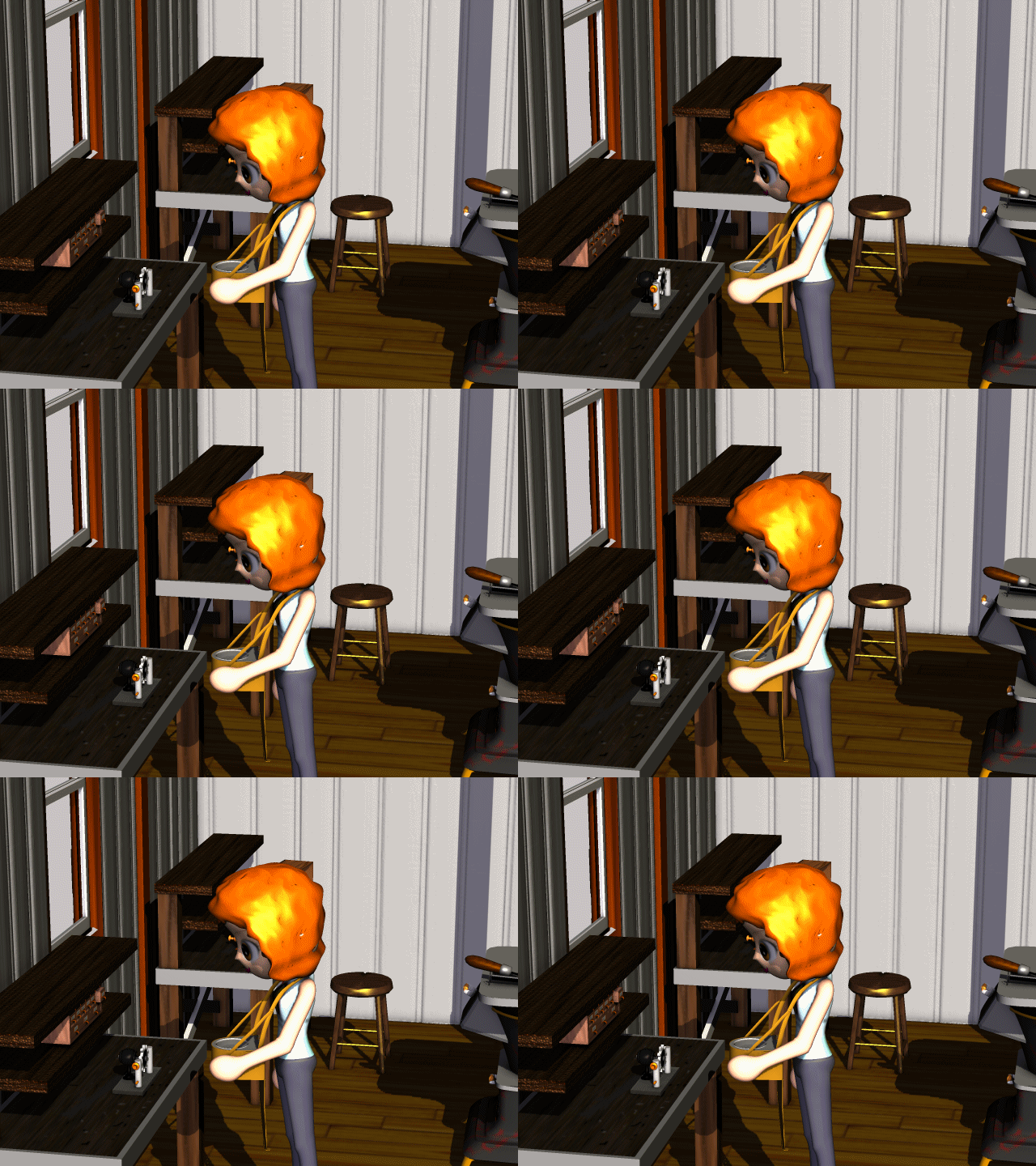
Martian is winding a coil for the receivers:
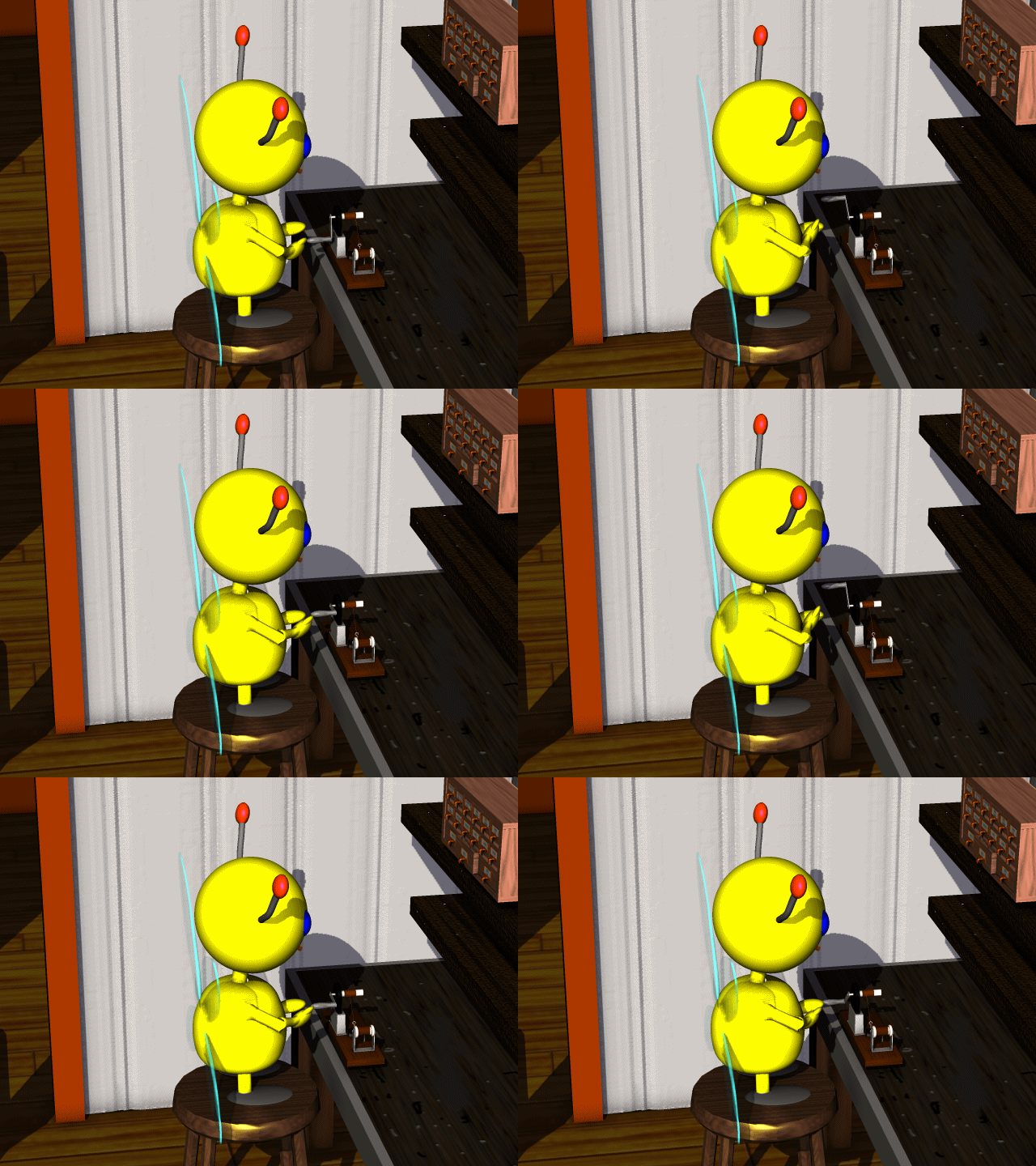
Happystar is soldering variometers in the tuner module. According to stories, Zenith started with non-electric soldering irons. My animation is a bit more hectic than the typical real process. Irons came in pairs. You’d leave one on the stove heating up while you used the other for a few minutes, then you’d trade.

 Polistra's Mill