

Part 1 showed the essential process of electrotyping in a small-scale experimental setup. Real factories like Kellogg’s Patent Insides used bigger machines in mass production.
Here again is the Kellogg building in KC, placed in my down-home scene.

Most of the Kellogg building was devoted to electrotyping, with hot-lead composition and the writers and researchers on the second floor. I’ve lined up a series of electrotyping machines on the first floor, with some halfway automated hot-lead on the second floor.

I’ll run the text PATENT INSIDES through the assembly line sequence, starting at top left and ending up at lower right.
= = = = =
First we use the Ludlow semi-automatic typesetter. Polistra is selecting the letters P A T E N T from the drawers of matrices, and lining them up in the stick.

Here’s the stick in the Ludlow, ready to cast.

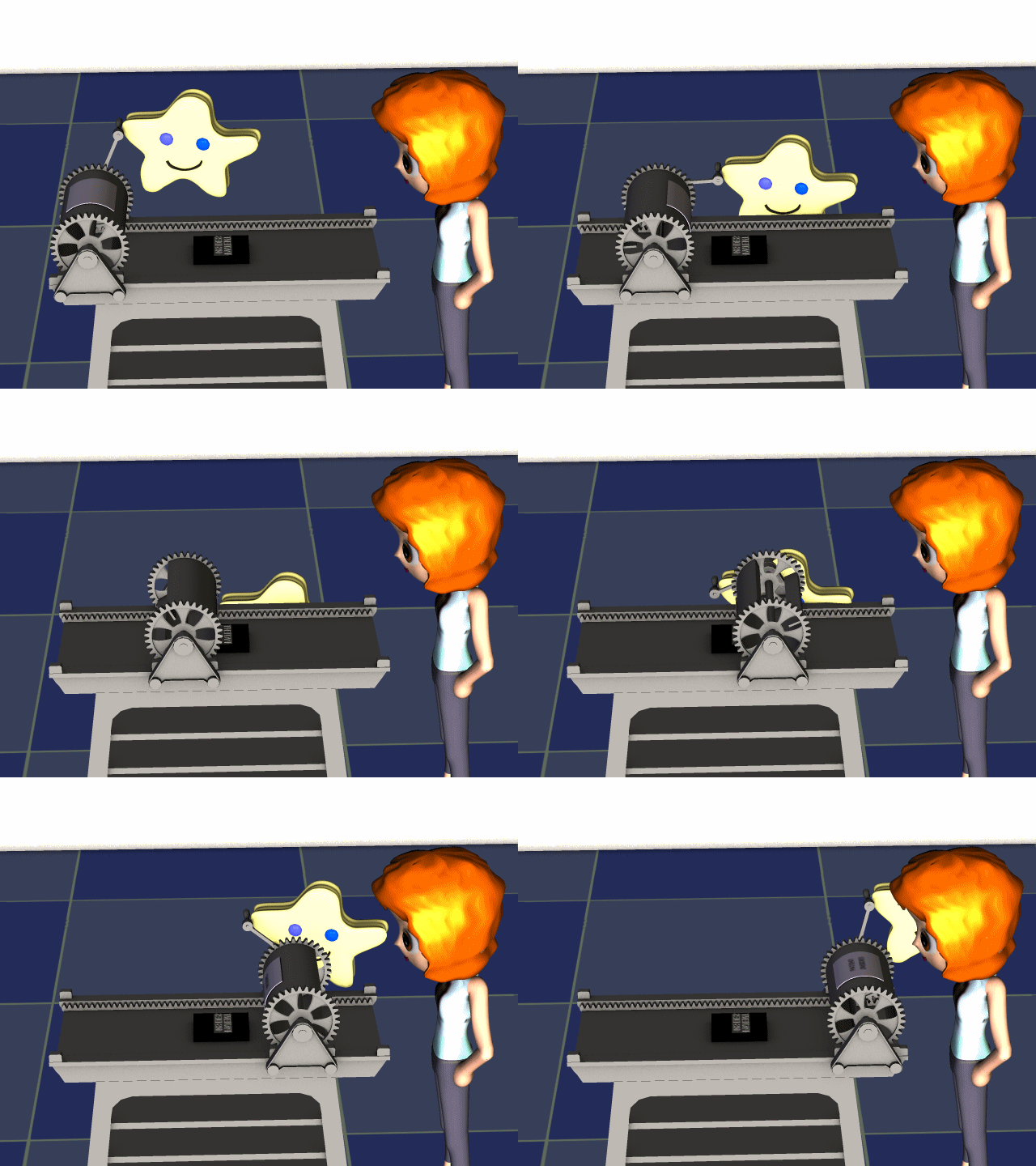
Happystar clamps the stick in, and Polistra simply pulls the lever. The Ludlow moves the hot lead injector under the stick, slams the piston down to inject lead into the matrices, then retracts the injector and vends the completed slug onto the tray.

= = = = =
Polistra did the same thing with I N S I D E S, then arranged the two slugs between some blank ‘furniture’ into a form.

Fussy sidenote: These large headline letters wouldn’t have been done by Ludlow or Linotype, even in the era when Linotype was universal. They would have been handset.
= = = = =
Finally we take a proof to be sure the text is correct and the fonts are well-chosen and not worn out. The proof press applies negligible pressure, so you can simply tie the form with string and stand it up. This makes it easier to rejigger the letters or slugs before you clamp everything down with quoins. With longer texts, you’d take the proof to the proofreader to check spelling and grammar. Not needed with two words!
Continued in part 3 with the electrotyping stages.
 Polistra's Mill