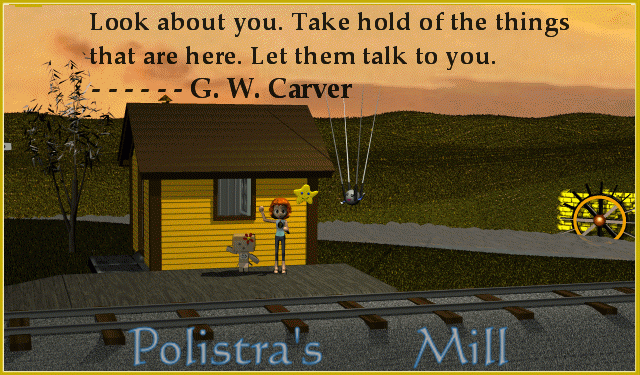

Some of the TVA house designs were intended for mass production, not local culture.

This was called the Demountable house. In modern terms it would be Modular. The basic section was made in a factory and shipped out by railcar for quick non-permanent use. The flat roof wouldn’t have lasted long in rainy and snowy places, though it would have been okay in California.

Happystar is peeking out of the unusually small side window for the kitchen.
The floor plan was like an efficiency or studio apartment, with a distinct bedroom and open kitchen.

For a duplex or double unit, two modules would be fastened together with one inverted. As a duplex, each entrance had good privacy. If the slot for the small window was opened into a door, the two units would become a larger two-bedroom house with real kitchen, or three bedrooms with open kitchen.


TVA intended its houses to be all-electric, following Henry Ford’s principle that the workers should buy the factory’s product.

Toward that end, TVA arranged with manufacturers to ‘recommend’ certain appliances, and set up a credit agency called EHFA to make the purchase easier.

The range and fridge in this kitchen were ‘recommended’. Both were compact and efficient.
Continued in Part 4.
 Polistra's Mill