
Continuing with GenRad’s light measuring tools.
Stroboscopes were a GenRad specialty, going through several generations, with the usual assortment of accessories for different industrial uses. Strobotac was one of GenRad’s widely known brands, along with Variac transformers. Their other products were more obscure, known only in research and testing labs.
Polistra is aiming a Strobotac at a fan. With the light off, the fan appears to be turning fast.
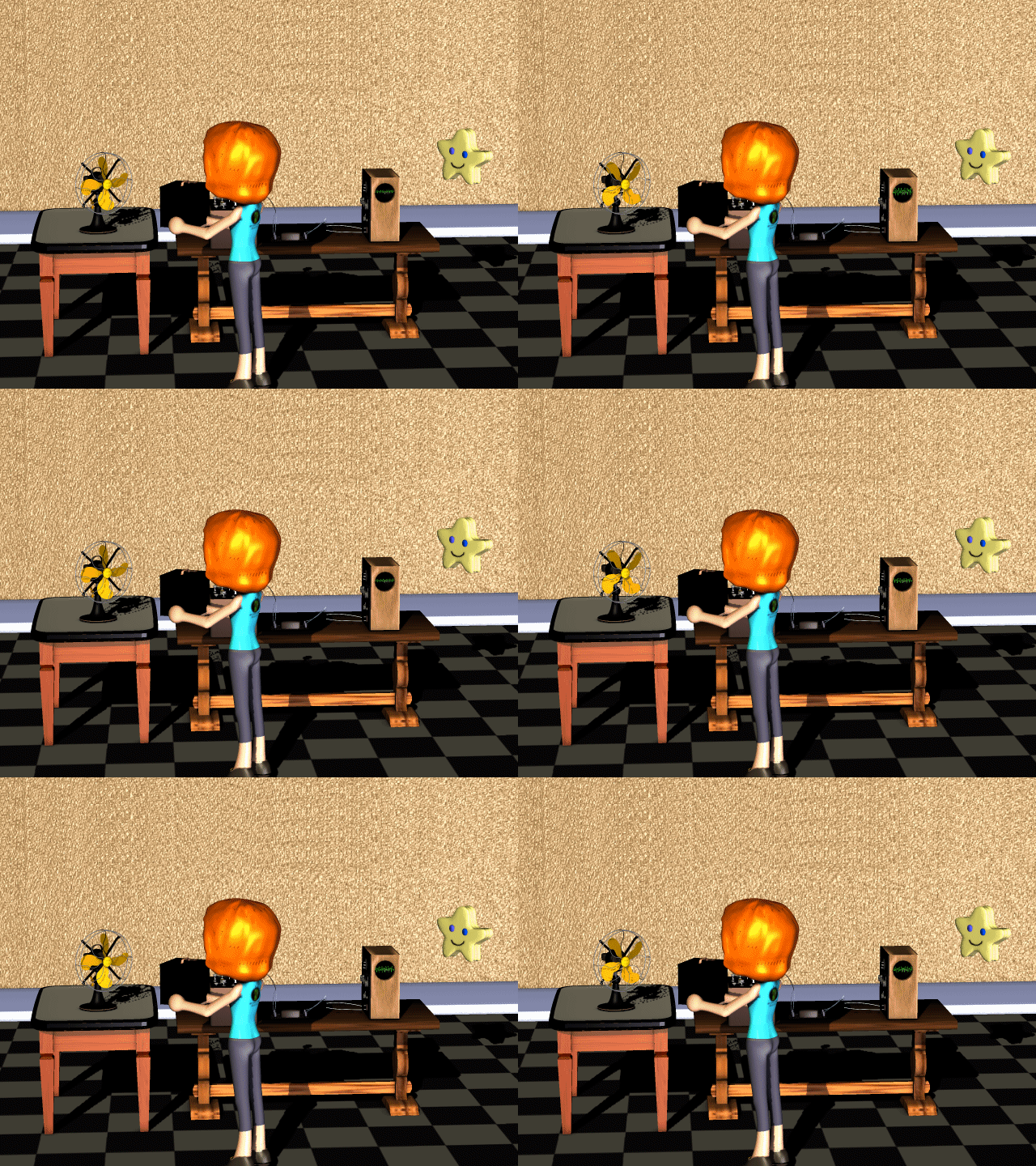
With the light on, the fan blade appears to be moving back and forth slowly.
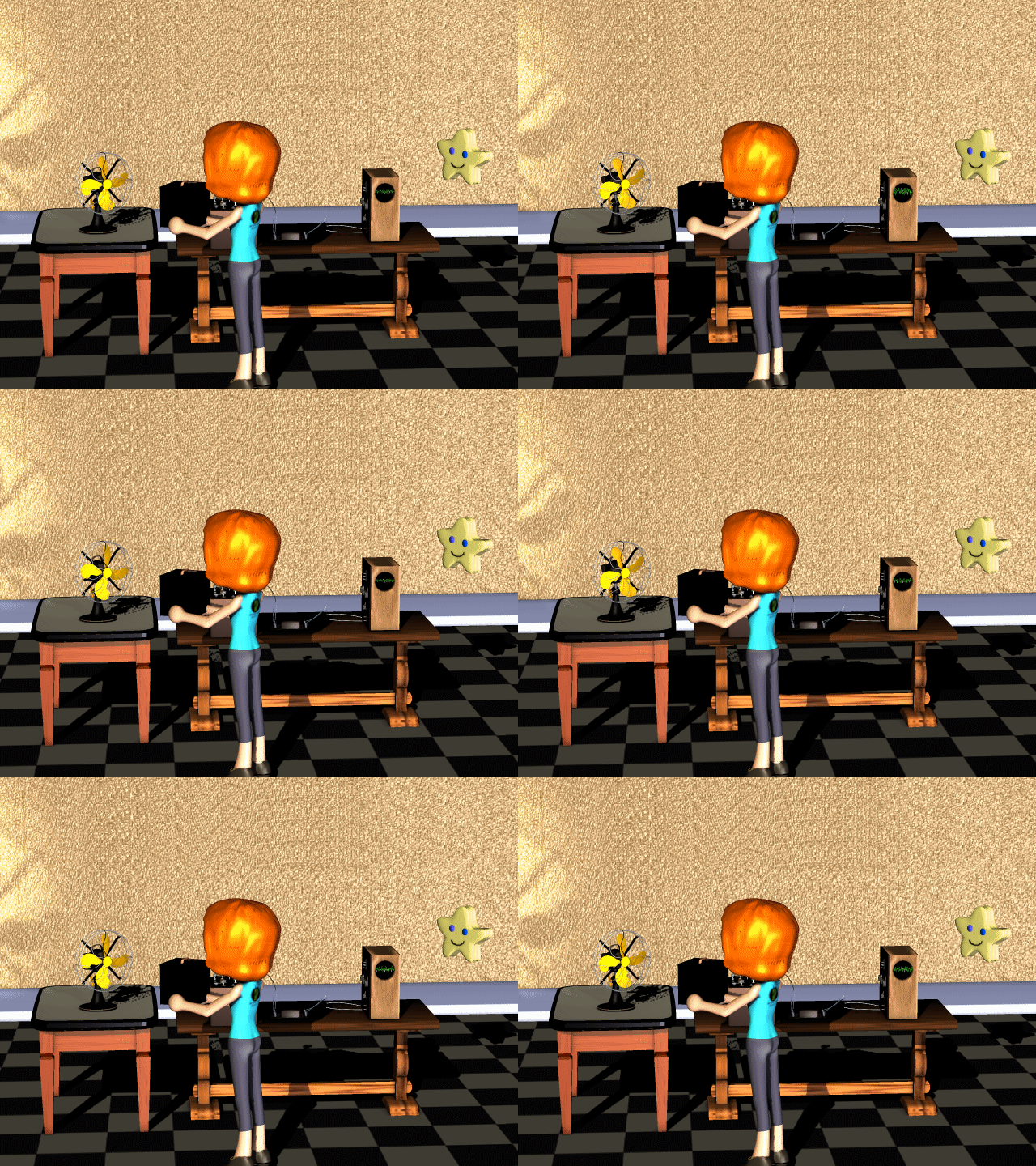
Main point: The stroboscope is a visual balance for frequency. It establishes a firm frequency standard, and lets us see the difference between the standard frequency and the test item’s frequency. The fan appears to be moving back and forth slowly, which tells us that the fan’s motor isn’t running at a steady speed.
We’re seeing rate of change of rotation, not rotation.
Bridges or balances always hold a firm standard on one side and the tested item on the other, showing the difference or delta between the test and the standard.
This 1930s Strobotac had two controls, frequency on top and function selector on bottom. The function selector included high and low frequency ranges, with a different multiplier driving the neon bulb. It also had provision for a contactor input to control the bulb. The contactor was driven by another device, such as a tachometer from an engine providing the standard frequency.

The little reed inside the reflector was for self-calibration. The reed was driven from the AC powerline, which was pretty solid 60 cps in most places. You could use it as a kind of vernier for the frequency dial. When the reed appeared to be standing still, the chosen frequency was an exact multiple of 60.
Secondary point: Computer animation, like film animation, IS a stroboscope, so there’s no way to show the continuous motion and the strobe effect honestly in an animation. Strobe effects are a constant problem in animations, typified by the stagecoach wheel.
By contrast, the Color Comparator in previous item was an honest animation. For once Poser’s rendering was realistic, so I didn’t have to play any tricks. Red illuminated the tomato more brightly than green or blue.
Even TV, though more analogish, is still stroboscopic because it scans one picture at a time. In theory a truly analog image could be sent over wires or radio, with a fat cable bundle or a matrix of 4096 transmitters, but it’s not worth the trouble and expense. A fiber bundle for short-distance analog transmission is common in medical and industrial tools like endoscopes.
Carrying a fully analog image with plain old light is, of course, just LIGHT! Every telescope and projector does it in a more formal way. The Magic Lantern with its sliders was a truly analog animator, unlike movie projectors which are always stroboscopic.

 Polistra's Mill