

Why did windshield wipers start relatively late in the development of cars? Partly because closed cars with glass windshields were late. But windshields were common for 10 years before wipers became standard.

Visors were an adequate solution for quite a while, just as porches and roof overhangs are adequate for houses. Some visors were extensions of the roof, most were glass. As long as the relative motion of rain is close enough to vertical, windows don’t get wet enough to block vision.
How close is close enough? The vector diagram is simple.
The important vector is from the edge of the visor to the bottom of the windshield. A drop that clears the edge of the visor will have a chance of hitting the glass if it moves fast enough horizontally.
Vertical speed of raindrops is constant, about 20 mph. The visor will always block some raindrops regardless of speed. A longer visor will protect at higher horizontal speed, but a REALLY BIG visor was impractical. In short, visors worked nicely until cars typically exceeded 20 mph.
Here’s one raindrop just clearing the edge of the visor when Polistra is driving her Detroit Electric at 20 mph. You can see that the drop is falling vertically by lining it up with the bars of the house window.

Here’s what happens when the same raindrop falls at the same vertical speed of 20 mph while the car is going 30.
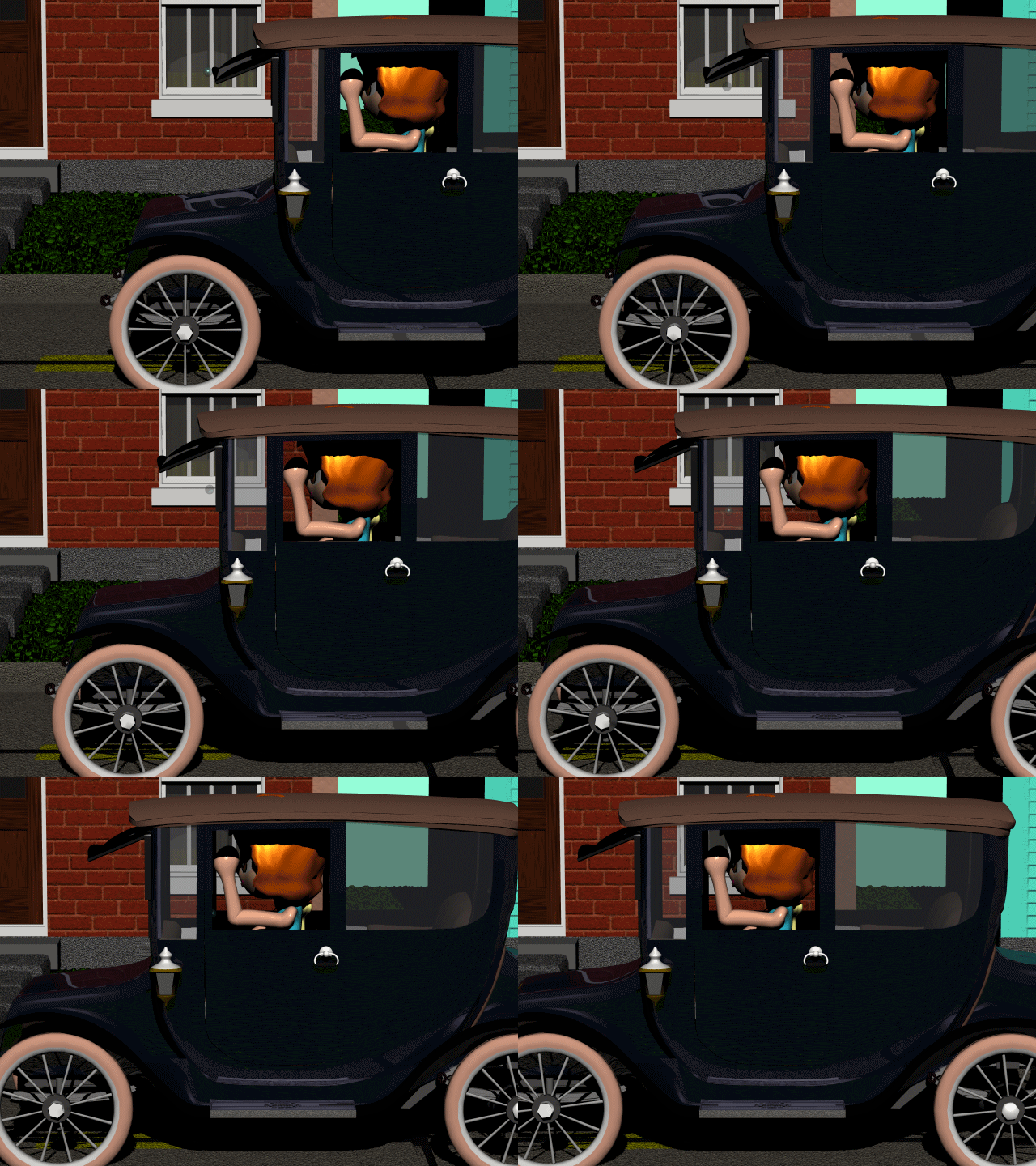
Hudson, generally somewhat ahead of the curve, got wipers in 1927.
Why did wipers become normal then? Because average road speeds quickly increased after 1927. The Good Roads Movement was laying out and improving highways. Route 66 was mapped out in 1926. The Lincoln Highway (mostly US 30) was formalized in 1928.

