
An odd Zillow listing triggered this tribute. Coldwell Banker is trying to sell the office building end of the old Robin Hood elevator in Ponca.
Zillow: Rare opportunity to own a striking two story structure within a five story industrial building offering endless redevelopment potential. Envision multi unit apartments, townhomes, boutique hotel suites, creative offices, or storage concepts.
I have a feeling storage concepts will win. It’s a sturdy fireproof building, easy to secure.
The whole setup has been out of business since 1959, but it looks like the two-story office part has been recently occupied. It has 1970s doors, a window AC, and a residential mailbox.

When I lived in Ponca in 1973-75, my workplace was one block south of Robin Hood on South 1st. We were a grain elevator repair company, but the location was coincidental and meaningless. I didn’t pay much attention to Robin Hood, which was mostly hidden behind some other storefronts along 1st. The Arcade Hotel, equally decrepit, was torn down while I was there. I went into the Arcade lobby a couple times for a vaguely remembered purpose, perhaps sending money to our crews in the field via Western Union.
Here’s a view from roughly where my office was, Robin Hood to the side and Arcade ahead.

Back in 2008 I did a graphic tribute to the Arcade, using it as a symbol for two types of capitalism, steady vs bubbly. The Arcade was just a railroad hotel until oil investor Lew Wentz arrived around 1910. Wentz bought it, expanded it, and lived in the top floor, using the club room for conferences. Most of the hotel continued catering to railroad travelers. EW Marland arrived at the same time and went into the same business on a vastly grander scale. He founded Conoco and built one of the fanciest mansions in the country. After selling Conoco to the Morgan interests, he advanced to governor of Oklahoma, then went broke and died. Wentz was still around in 1948, helping the community and dabbling in politics as an influencer.
Arcade seen from the north side on Grand:

Arcade seen from the south:

= = = = =
Here’s the overall history of the Robin Hood bldg, condensed from the historical landmark PDF.
The Cherokee land run in 1893 instantly spurred large-scale agriculture, especially winter wheat. Production requires storage and shipment, so bins and elevators were built near railroads in every town.

Ponca and Crosspatch** were founded at the same time. Crosspatch got the first station on the Santa Fe. Ponca’s founders “persuaded” the railroad agent to move south, and Ponca became the center of the settlement.

The first train arrived in Ponca City on September 22, 1894. (Coincidental anniversary!) Three residents began a mill operation just north of the station around the same time, naming it Ponca City Milling Co. The first mill was a simple wooden building with equipment shipped from Ohio. The company was sold several times until the Donahoe family bought it in 1922. Donahoe was the main banker and business leader until Marland and Wentz transformed the economy to oil.
Donahoe built the 6-story mill building in 1922, using the common industrial pattern of a concrete grid filled by varying modules. Between 1928 and 1930 the three tall elevator structures were built.
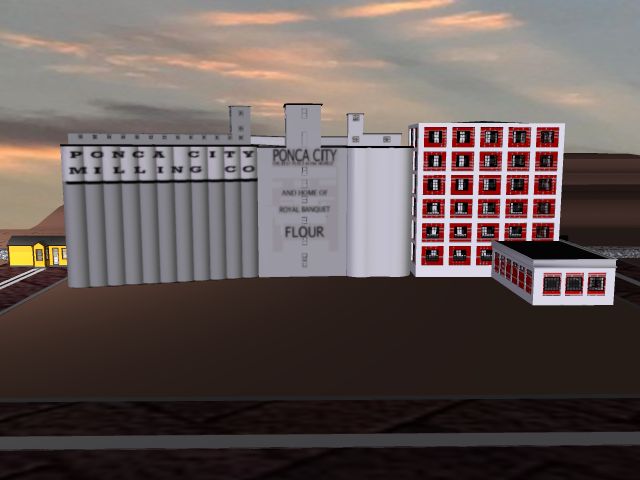
Ponca City,
the Best Place In The World,
and home of
Royal Banquet Flour!
Ponca wasn’t the Best Place but it was a damn good place for a long time.
Yukon has a strikingly similar mill, now renovated and spruced up but not used as an elevator. The founder of our construction company had been part of the crew that built the Yukon version; I don’t remember if he was also involved in this one. He had retired by that time.
Donahoe died in 1945 and the family sold the mill to International Milling Company, which produced (and still produces) flour under the Robin Hood name. International painted the Robin Hood logo on both sides of the main elevator, covering up the old Ponca City Milling.
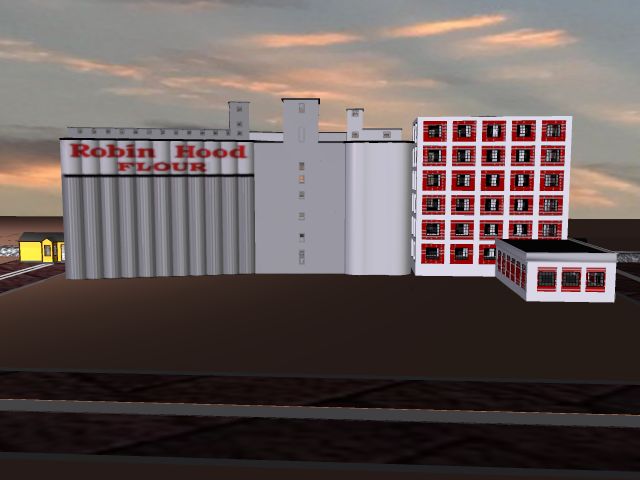
International departed and closed the Ponca mill in 1959. When I lived there in the 70s the Robin Hood name was still clear. Now the outer layer has faded off, exposing some of the original name.
= = = = =
** Historians call it Cross; my ancestors called it Crosspatch. I’ll go with the ancestors.

